All Categories
Featured
Table of Contents
- – The State of Marketing Returns in 2026
- – Retail and E-commerce ROI Trends
- – The Impact of Local Search on Retail
- – Professional Services and Specialized Solutions
- – B2B Technology and Software Benchmarks
- – Healthcare and Wellness Marketing Performance
- – Consumer Privacy and its Effect on Attribution
- – Geographic Performance and Localized Benchmarks
- – Looking Ahead: The Evolution of ROI in 2026
The State of Marketing Returns in 2026
Marketing efficiency has reached a new stage of maturity in 2026. Organizations across the United States are moving away from surface-level metrics like clicks and impressions, focusing instead on hard revenue data and long-term customer value. In many professional sectors, the average return on investment (ROI) has stabilized as artificial intelligence tools for attribution have become standard. Whether a business is operating in Chino or focusing on a wider regional footprint, the ability to track every dollar spent is now a requirement for survival.
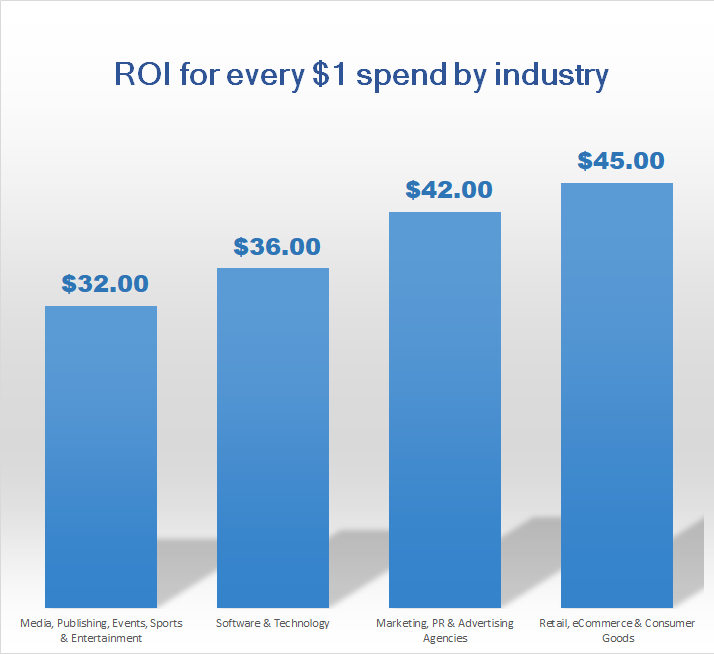
The current economic climate in 2026 emphasizes lean operations. Companies are no longer willing to "spray and pray" with their advertising budgets. Instead, they are looking for specific benchmarks to see how they stack up against competitors. In the United States, the general benchmark for a successful marketing campaign is often cited as a 5:1 ratio, where every $1 spent generates $5 in revenue. However, this varies wildly depending on the specific sector and the cost of the goods or services being sold.
Retail and E-commerce ROI Trends
Retail continues to see some of the highest volume of transactions but also some of the tightest margins. In 2026, the shift toward social commerce has matured, with platforms offering direct checkout experiences that minimize friction. For retailers in regions like Ontario or Fontana, the focus is on hyper-local targeting. ROI in this sector often hovers around 4:1 for new customer acquisition, but jumps significantly to 10:1 or higher when focusing on repeat customers through email and SMS loyalty programs.
Performance in retail is heavily influenced by the seasonal peaks common in the US market. The 2026 data shows that summer sales and winter holiday pushes still account for nearly 40 percent of total annual marketing spend for many brands. To maintain a high ROI during these periods, companies are using predictive modeling to stock inventory based on real-time search trends. Success often depends on effective Online Website Marketing Pool to ensure that the right products are seen by the right audience at the exact moment of intent.
The Impact of Local Search on Retail
Physical stores in Chino Hills and Brea have seen a resurgence in 2026 as "near me" searches have evolved into "available now" searches. The ROI for local search advertising is currently outpacing national brand awareness campaigns by nearly 30 percent. Consumers are prioritizing convenience and immediate gratification, which means that businesses appearing at the top of local map results are capturing the lion's share of the market. This localized approach is a key part of the broader US marketing strategy for 2026.
Professional Services and Specialized Solutions
The professional services sector, including legal, accounting, and specialized industry consulting, operates on a different set of metrics. Because the lifetime value (LTV) of a client is high, these businesses can afford a higher cost per acquisition (CPA). In 2026, it is common to see a lead generation cost of $200 to $500 for high-end services, with the eventual ROI reflecting the multi-year nature of the client relationship. Many firms in Chino are seeing success by focusing on thought leadership and educational content rather than aggressive sales tactics.
Data suggests that Online Website Marketing Professional Marketing remains a top priority for executives who want to establish authority in their field. By the middle of 2026, the conversion rate for content-based leads was 15 percent higher than that of traditional display advertising leads. This shift indicates that US consumers are becoming more discerning, requiring more touchpoints before they commit to a high-ticket professional service. ROI for these long-cycle industries is often measured over 12 or 18 months rather than 30 days.
B2B Technology and Software Benchmarks
In the B2B tech space, the 2026 benchmarks show a heavy reliance on account-based marketing. Companies are no longer targeting thousands of low-quality leads. Instead, they are focusing on a few hundred high-value accounts. This precision has led to an average ROI of 3:1 in the first year, which usually doubles by year two as the subscription revenue accumulates. For those invested in Online Website Marketing in Southern California, the results are measurable through reduced churn rates and higher upsell opportunities.

Healthcare and Wellness Marketing Performance
The healthcare industry in the United States has faced unique challenges in 2026 regarding data privacy and advertising regulations. Despite these hurdles, the wellness sector is thriving. Marketing for elective procedures or specialized wellness clinics in areas like Rialto and Montclair focuses heavily on testimonial-based content and video marketing. ROI in healthcare is currently averaging around 4.5:1, with a significant emphasis on patient retention and referrals.

Video content has become the primary driver of engagement for healthcare brands. In 2026, short-form educational videos about specific health concerns have shown a 200 percent higher engagement rate than text-based blog posts. This trend has forced many marketing departments to reallocate their budgets toward video production and away from traditional print or radio advertising, which have seen a steady decline in ROI over the past several years.
Consumer Privacy and its Effect on Attribution
A major factor affecting ROI across all industries in 2026 is the increased difficulty of tracking users across different platforms. With privacy laws becoming stricter, marketers are relying on first-party data. This means that building an internal database of emails and phone numbers is more valuable than ever. The ROI on "owned" media—channels that the business controls—is currently three times higher than the ROI on "rented" media like social media advertising, where costs are subject to algorithm changes and rising bid prices.
Geographic Performance and Localized Benchmarks
Performance varies by region, even within the same state. In Southern California, the competitive environment in Chino often leads to higher advertising costs, which can temporarily suppress ROI. However, the higher density of affluent consumers means that the total revenue potential is also greater. Marketers in 2026 are using geographic fencing to ensure they are only spending money in zip codes that have shown a high propensity to convert for their specific line of work.
Benchmarks for the Inland Empire and surrounding valleys show that mobile-first strategies are dominant. Over 85 percent of all marketing conversions in these areas now happen on a mobile device. Businesses that have not optimized their mobile experience are seeing their ROI drop by as much as 50 percent compared to mobile-optimized competitors. This underscores the importance of technical infrastructure in supporting marketing goals.
Looking Ahead: The Evolution of ROI in 2026
As 2026 progresses, the definition of a "good" ROI is becoming more nuanced. While the 5:1 ratio is a helpful starting point, the most successful businesses are those that understand their specific unit economics. This involves knowing the exact margin on every sale and the long-term value of every customer. In the US market, companies are increasingly using AI-driven dashboards to monitor these numbers in real-time, allowing them to shift budget from underperforming campaigns to high-performing ones in minutes rather than months.
The use of predictive analytics is another trend that has hit its stride this year. By analyzing past consumer behavior, companies can now predict which leads are most likely to convert, allowing sales teams to prioritize their efforts. This has led to a noticeable increase in "sales ROI," which measures the efficiency of the sales team in closing leads generated by marketing. In many sectors, this synergy between sales and marketing is the primary driver of growth in 2026.
Marketing in 2026 requires a blend of technical precision and creative storytelling. The industries that are winning the ROI race are those that provide genuine value to their customers while maintaining a rigorous focus on the data. Whether it is through localized search optimization, high-quality content, or advanced attribution modeling, the path to profitability is clearer for those who are willing to adapt to the changing digital environment. As the year continues, these benchmarks will likely serve as the standard for any business looking to grow its footprint in the United States.

Table of Contents
- – The State of Marketing Returns in 2026
- – Retail and E-commerce ROI Trends
- – The Impact of Local Search on Retail
- – Professional Services and Specialized Solutions
- – B2B Technology and Software Benchmarks
- – Healthcare and Wellness Marketing Performance
- – Consumer Privacy and its Effect on Attribution
- – Geographic Performance and Localized Benchmarks
- – Looking Ahead: The Evolution of ROI in 2026
Latest Posts
Utilizing Competitive Research to Improve Sector Results
Annual Marketing Performance Summaries
Elevating Your Chino Business with Better Performance Metrics
Latest Posts
Utilizing Competitive Research to Improve Sector Results
Annual Marketing Performance Summaries
Elevating Your Chino Business with Better Performance Metrics